How to Find and Evaluate Reliable Chinese Suppliers
Finding a Chinese supplier is easy. Finding the right supplier for your business is much more important. Learn how to evaluate suppliers before placing an order.
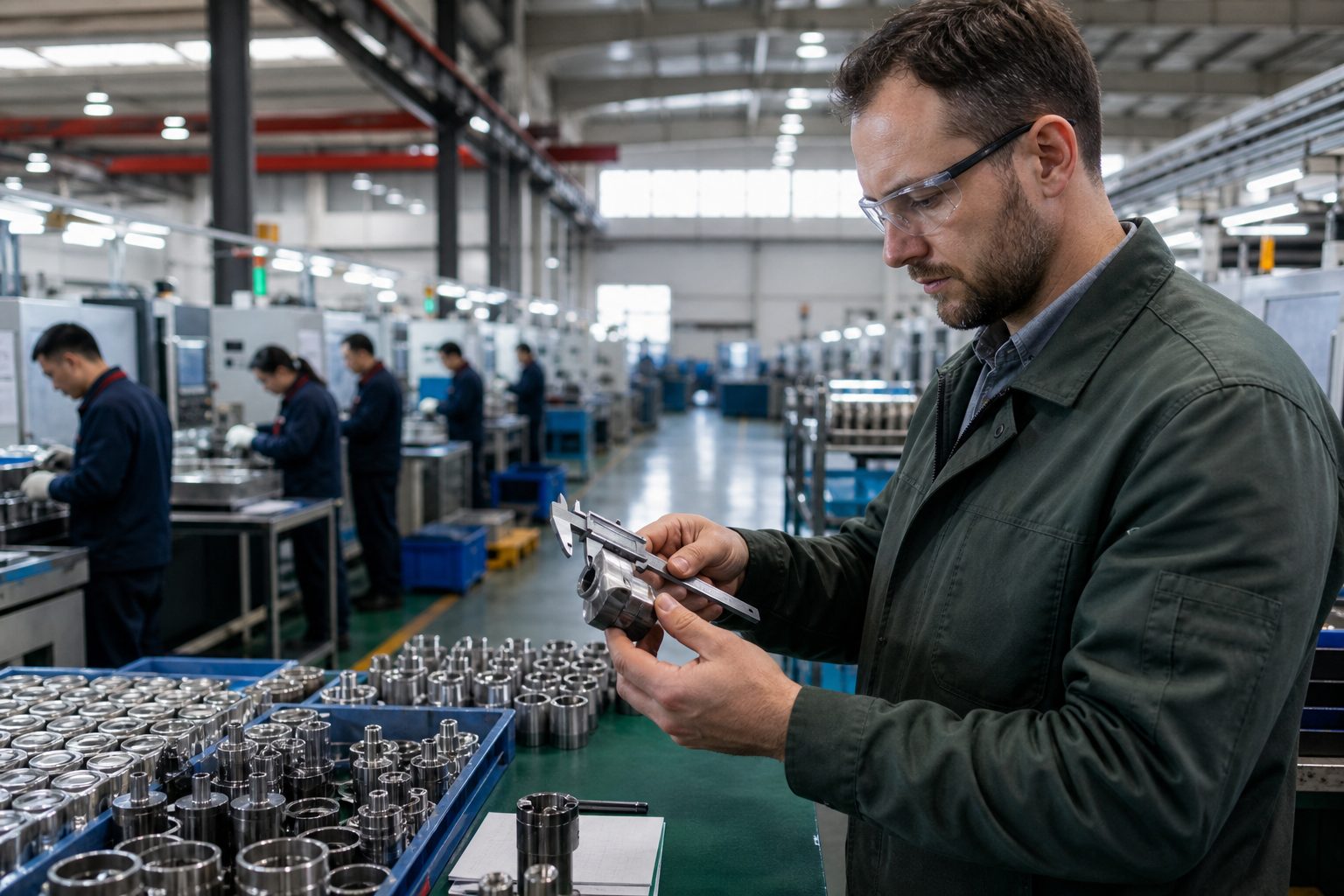
China has a vast network of manufacturers and trading companies serving different industries and markets. The challenge is not simply finding a supplier.
The challenge is finding one suitable for your product, quantity, quality requirements, budget, market and long-term goals. Reliability is not a permanent badge; it is evidence that a supplier can meet a specific requirement consistently.
1. Manufacturer or Trading Company?
A manufacturer controls direct production and may offer deeper process knowledge or customization. A trading company works with one or more factories and can be useful for multiple categories, smaller combined requirements or consolidated sourcing.
Neither is automatically better. Some factories export through a separate company, while some trading companies have strong technical teams and long factory relationships. Ask who owns the production equipment, who employs the operators, who signs the contract and who manages quality.
- Direct production
- Detailed process knowledge
- Potential customization advantages
- Multiple categories
- Consolidated sourcing
- Broader supplier coordination
2. Check Product Capability
Look for specialization that matches your exact product. Ask which materials and processes are used, what customization is available and which products represent most of the supplier’s regular production. A large catalog may reflect broad access rather than direct manufacturing depth.
Request model-specific drawings, specification sheets or examples of similar work where appropriate. Discuss normal MOQ, tooling, testing and tolerances. Technical questions reveal more than a general claim of experience.
- What products does the supplier specialize in?
- Which materials and production processes are used?
- What work is completed in-house?
- Which customization is practical?
- What normally drives the MOQ?
3. Evaluate Communication
Fast replies are helpful, but accurate understanding matters more. Send a structured request and see whether the response addresses each requirement. A good contact identifies missing information, asks relevant questions and distinguishes confirmed facts from assumptions.
Clear English can reduce friction, but technical diagrams, annotated photos and approved samples can be equally important. Confirm important decisions in writing and keep versions of specifications under control.
4. Evaluate Production Capacity
Ask about normal output, current lead time, seasonal constraints and the size of orders the factory handles comfortably. Capacity should be appropriate for your requirement. A very large plant may give a small order low priority; a small workshop may struggle with rapid scale-up.
Discuss the production plan, critical subcontractors and bottleneck processes. Capacity evidence might include equipment lists, schedules, live video or an on-site assessment, depending on project risk.
5. Evaluate Quality Management
Quality management begins with measurable product specifications and an agreed reference. Review sample consistency, incoming-material controls, process checks, final checks, packaging standards and record keeping.
Ask how the supplier handles a non-conforming item and prevents recurrence. Do not assume that a certificate or inspection alone guarantees every shipment. Quality requirements and inspection options must be designed for the product and order.
6. Review Export Experience
Relevant export experience can help with packaging, documentation and shipment coordination. Ask which markets the supplier serves, whether it has handled similar products and who prepares export documents.
Experience in one country does not prove compliance in another. The buyer remains responsible for confirming destination requirements with qualified local advisers. Use export history as supporting evidence, not the only selection criterion.
7. Compare Quotes Correctly
Give suppliers the same specification, quantity and quotation format. Compare unit price, MOQ, packaging, tooling, customization, shipping term, payment terms and lead time. Clarify what is excluded and whether tax, molds, labels, spares or test reports are separate.
Investigate large differences. One supplier may have assumed a different material or packing method. A comparison is valid only when the commercial and technical scope is aligned.
Normalize the scope first. A low quote for a different product is not a saving.
8. Start with a Small Order or Sample
A sample can validate appearance, material, function and communication. A trial order adds evidence about production consistency, packaging, schedule and delivery. Define the trial’s acceptance criteria before it begins.
A small order does not remove risk, and some customized or industrial products cannot be tested economically at tiny volumes. Scale the verification effort to the potential consequence of failure.
Supplier Evaluation Checklist
- □ Product capability and specialization
- □ Factory or supplier information
- □ Complete product specifications
- □ Representative sample
- □ MOQ and pricing
- □ Production capacity and lead time
- □ Quality requirements and controls
- □ Relevant export experience
- □ Packaging and shipping readiness
- □ Clear, documented communication
What Supplier Verification Actually Means
Supplier verification can involve different levels of checks: business registration information, identity and bank details, production capability, video review, document review or an on-site assessment. The appropriate level depends on buyer requirements and project risk.
Verification reduces uncertainty; it does not promise future performance. My Supply Bridge does not claim that every possible supplier is already verified. We define checks for the specific sourcing project and report the evidence available.
How My Supply Bridge Helps
My Supply Bridge supports supplier verification, product sourcing, quality control and project procurement. We help buyers create a clear requirement, identify relevant supply resources, compare evidence and coordinate practical checks before an order.
The aim is not to present a long list of companies. It is to improve the quality of the sourcing decision.
Related articles
Need Help Finding the Right Chinese Supplier?
Submit your requirements and let My Supply Bridge help you explore suitable sourcing options.
