
China Agricultural Machinery: A Practical Sourcing Guide for International Buyers
China has a broad agricultural machinery supply chain. This guide explains the main equipment categories and how international buyers can approach agricultural machinery sourcing.
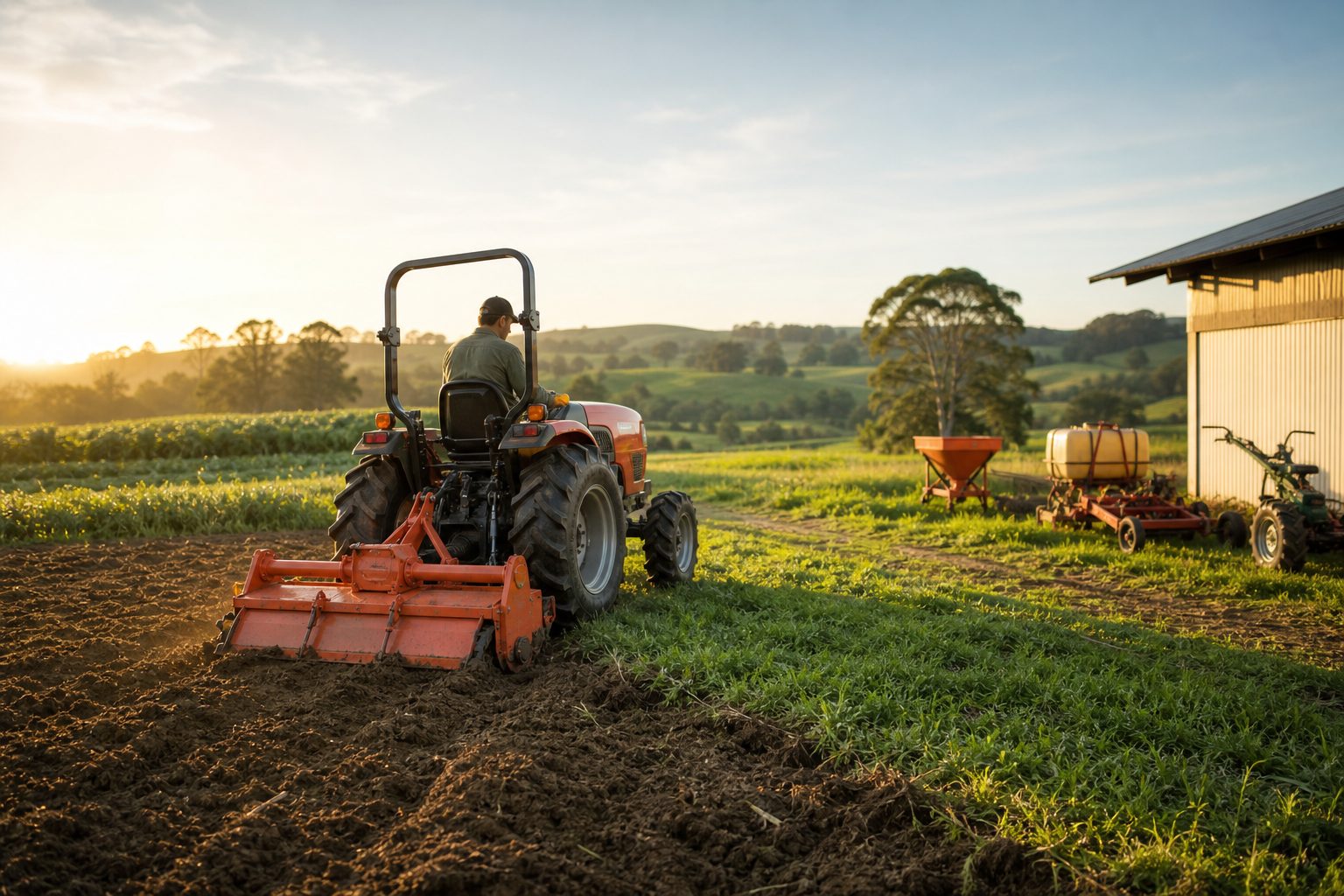
China has developed a broad manufacturing ecosystem for agricultural machinery and farm equipment. For international buyers, the opportunity is not limited to individual machines.
The larger opportunity is building equipment combinations around the needs of different farms, crops and markets. Good sourcing begins with the work that must be done, not the most impressive machine in a catalog.
What Types of Agricultural Machinery Can You Source from China?
Each label covers a wide range of capacities and configurations. A product name alone is not enough for comparison. Buyers should provide crop, acreage, working width, expected output, power source and operating environment.
- Compact tractors
- Utility and farm tractors
- Different horsepower ranges
- Rotary tillers
- Plows and harrows
- Cultivators
- Seeders
- Planters
- Rice transplanters
- Sprayers
- Fertilizer spreaders
- Crop protection equipment
- Combine harvesters
- Small harvesters
- Crop-specific machines
- Water pumps
- Irrigation and solar systems
- Hoses and accessories
- Grain cleaners
- Rice and grain mills
- Dryers and processing equipment
Why Buy Agricultural Machinery from China?
China’s supply base covers many equipment categories, sizes and levels of complexity. Buyers can explore compact machines for smaller farms, larger equipment for commercial operations and accessories that connect stages of production.
Supplier diversity also creates options for configuration and customization. Those options require careful comparison: compatibility, documentation, parts and production consistency matter as much as the breadth of a catalog. China sourcing does not guarantee a lower total cost, so evaluate the complete operating and landed cost.
- Broad product range
- Manufacturing depth across components and complete machines
- Equipment for different farm sizes
- Configuration and customization possibilities
- Ability to combine complementary equipment
How to Choose the Right Agricultural Machinery
Start with farm conditions. Farm size influences capacity; crop type determines attachments and processing; soil and terrain affect traction, working width and machine weight. Labor availability, operator experience and available power determine whether a machine can be used productively.
Plan beyond delivery. Identify spare parts, consumables, tools, manuals and local service capability. A machine that works well but cannot be maintained locally may be a poor fit. Budget for attachments, freight, commissioning and initial spares, not only the base unit.
- Farm size and field layout
- Crop type and production method
- Soil conditions and terrain
- Labor and operator experience
- Available fuel or electric power
- Local service capability
- Budget, spare parts and lifecycle needs
Think in Equipment Solutions, Not Individual Products
A tractor is useful only when its power take-off, hitch, hydraulics and dimensions are compatible with the required implements. Likewise, a mill needs suitable input preparation, power, output handling and packaging. Map the workflow from field preparation through post-harvest handling before selecting individual products.
Farm preparation → planting → irrigation → crop management → harvesting → processing → packaging
- Identify bottlenecks at each stage
- Match capacities so one machine does not overwhelm the next
- Check interfaces, power and consumables
- Plan transport, installation and operator training
- List essential spares for the full package
Example: Small Farm Equipment Package
A practical package might include a compact tractor, rotary tiller, seeder, sprayer, water pump and trailer. The tractor provides flexible power; the implements address preparation, planting and crop care; and the pump and trailer support water and transport.
This is a concept, not a universal recommendation. Actual equipment must be selected according to crop, farm size, terrain, local conditions, implement compatibility and operator capability. In some environments, two-wheel tractors or stand-alone machines may be more appropriate.
Example: Agricultural Processing Package
A post-harvest package could combine a grain cleaner, milling machine, dryer and packaging machine. The objective is to reduce losses, improve consistency and add value after harvest.
Capacity must be balanced across the line. Confirm input moisture and cleanliness, power supply, output specification, dust management, food-contact requirements where relevant, packaging sizes and local maintenance. A fast mill does not improve the system if the dryer or packing stage is undersized.
Questions to Ask Before Ordering
Use supplier answers to create a comparison table. Ask for model-specific documents rather than generic brochures, and verify that the quoted configuration includes every essential attachment and accessory.
- Which crops will the equipment handle?
- What is the farm size and field layout?
- What hourly or daily capacity is required?
- What power, fuel or voltage is available?
- Which wearing parts and initial spares are needed?
- What is the expected annual usage?
- What are the soil, climate and operating conditions?
- What manuals, training and after-sales support are available?
- How will the equipment be packed, shipped and assembled?
How My Supply Bridge Can Help
My Supply Bridge can help international buyers explore agricultural machinery sourcing as a connected project. We translate farm or processing requirements into equipment categories, identify relevant supply resources and coordinate product sourcing, supplier verification, quality control and project procurement.
Our role is to help buyers ask better questions and compare practical options. Final selection should reflect local agronomic, technical, regulatory and service conditions.
Use our irrigation pump selection guide to define flow rate, total head, power supply and the technical details suppliers need for an accurate quotation.
Related articles
Looking for Agricultural Machinery from China?
Tell us about your farm, project or equipment requirements.
